
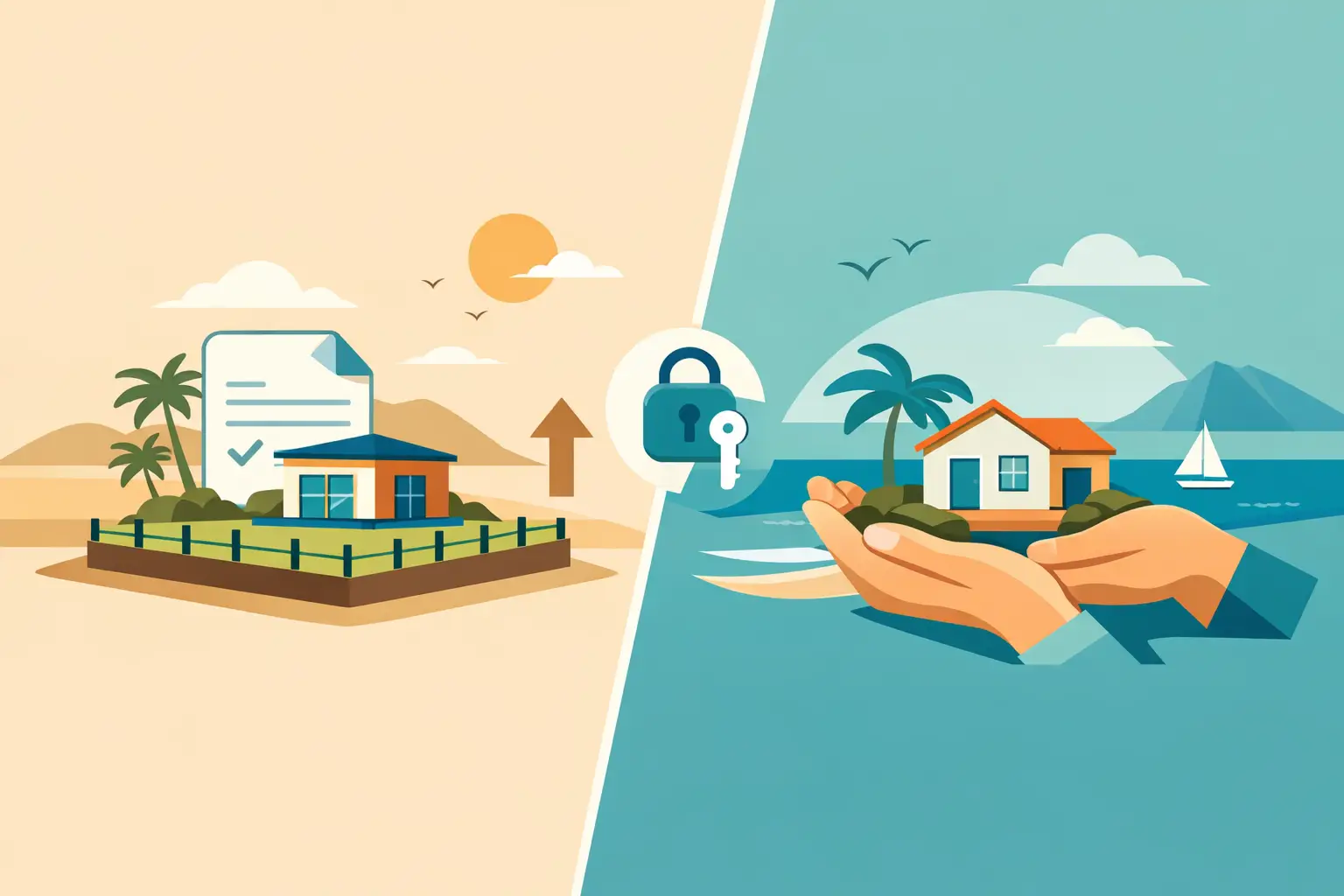
Titled Land vs Fideicomiso in Baja
A buyer falls in love with a stretch of Baja coastline for the same reason everyone does – the quiet coves, the blue water, the feeling that the modern world has finally backed off. Then the paperwork starts, and the dream turns into a very practical question: titled land vs fideicomiso. If you are looking at coastal property in Mexico, especially in places with long-term residential or tourism potential, this is not a small detail. It can shape how you buy, how you hold, how you build, and how confident you feel years from now.
For many US buyers, the real issue is not whether one structure is always good and the other is always bad. It is whether the ownership structure matches the kind of opportunity you want. If you are buying a homesite for personal use, one path may feel workable. If you are thinking bigger – estate planning, future resale, development, hospitality use, or holding a truly scarce coastal asset – the difference becomes much more meaningful.
Titled land vs fideicomiso: what is the real difference?
At a basic level, titled land means the property has direct legal title. Ownership is recorded through a deed and public registry in Mexico. In the right setting, that gives buyers a clearer, more straightforward sense of control over the asset itself.
A fideicomiso is a bank trust commonly used by foreign buyers in Mexico’s restricted zone, which includes coastal areas. The bank holds the title in trust, and the foreign buyer is the beneficiary with rights to use, improve, sell, lease, or transfer the property according to the trust terms and Mexican law.
That means both can provide a legal path to control property, but they do not feel the same in practice. One is direct title. The other is a trust arrangement built to allow foreign ownership rights in a regulated coastal framework. For some buyers, that distinction is manageable. For others, especially those focused on simplicity and long-view value, it is the whole story.
Why this matters more on the coast
Coastal land is not ordinary real estate. It is finite, emotional, and often tied to a much bigger vision than simply owning a lot. In a place like Bahía Concepción, where the setting still feels wild, low-density, and deeply authentic, buyers are often not just buying for today. They are buying for what the property can become over ten or twenty years.
That is where ownership structure starts to matter. A buyer planning a modest personal retreat may look at a fideicomiso and decide it fits. A buyer thinking about a branded villa compound, an eco-lodge concept, a family legacy property, or a future resale to another investor may place more value on the clarity and market appeal of titled land.
Scarcity changes the conversation. When the land itself is the prize, any factor that affects confidence, flexibility, or transaction complexity deserves close attention.
The appeal of titled land
The biggest advantage of titled land is psychological as much as legal. Buyers understand title. Investors understand title. Lenders, partners, heirs, and future purchasers tend to respond well to title because it feels familiar and direct.
That does not mean titled property is automatically simple. Buyers still need proper due diligence, clear boundaries, legal review, and confirmation that the title history is clean. But once those boxes are checked, direct title often feels more transparent than a bank trust layered over the transaction.
There is also a market perception component. When a property is legally titled, it can be easier to present as a long-term asset with straightforward ownership standing. For buyers who are comparing multiple opportunities in Baja California Sur, that can create a stronger sense of confidence.
In premium coastal settings, confidence drives value. The easier a property is to understand, the easier it is to imagine holding it, improving it, or eventually selling it.
Where a fideicomiso can still make sense
A fideicomiso exists for a reason. It has long been a standard mechanism for foreign buyers in restricted coastal zones, and many people own valuable Mexican property this way without issue. The trust can allow use, transfer, inheritance planning, and resale rights when structured properly.
For a buyer purchasing a finished home for lifestyle use, especially one who is comfortable with annual bank fees and the administrative structure, a fideicomiso may be perfectly acceptable. It is familiar to many agents, attorneys, and closing professionals across coastal Mexico.
Still, acceptable and ideal are not always the same thing. The trust introduces another party into the ownership framework, along with renewals, bank administration, and extra paperwork. Some buyers are unfazed by that. Others see it as friction they would rather avoid, especially when evaluating a raw land investment with larger future ambitions.
Titled land vs fideicomiso for investors and developers
This is where the trade-offs become sharper. Investors and developers tend to care about control, scalability, transferability, and perception in the resale market. They are not just asking whether they can own the property. They are asking how the structure affects timing, partnerships, planning, and exit.
With titled land, the ownership story is often easier to explain. That matters when bringing in co-investors, marketing lots, structuring a hospitality concept, or preparing a future disposition. Simplicity has value, especially when the land is part of a broader commercial vision.
With a fideicomiso, the rights may still be strong, but there is more to explain. More explanation can mean more hesitation. In competitive investment environments, hesitation costs momentum.
This does not make fideicomiso wrong. It simply means that buyers pursuing larger projects should think beyond the initial purchase and consider what the ownership structure will feel like at every later stage.
What buyers often overlook
Many buyers focus only on legality, as if the question begins and ends with whether both options are lawful. That is too narrow. The better question is how each structure affects the ownership experience.
Consider administration. A trust usually brings ongoing fees and institutional processes. Consider resale. Some future buyers may be entirely comfortable with a fideicomiso, while others may place a premium on titled land. Consider development. If the vision includes subdivision, hospitality, multiple structures, or long-term family transfer, clarity becomes more than a preference.
Then there is emotion, and emotion matters in real estate. A rare coastal property should feel liberating, not complicated. When buyers picture sunsets over the Sea of Cortez, private launches from a protected bay, or a hillside homesite with room for a dream retreat, they are responding to possibility. Ownership structure either supports that confidence or quietly chips away at it.
Why titled coastal property stands out in Baja
Baja has no shortage of beauty. What it does have a limited supply of is coastal property that still feels undiscovered while offering real long-term upside. That is why titled coastal land carries such strong appeal. It pairs the romance of the destination with the practical strength of direct ownership.
For buyers who want more than a vacation property – those who see a future residence, a legacy hold, a boutique hospitality concept, or a strategic land position in an extraordinary natural setting – title can be a powerful differentiator.
This is especially true in areas outside the crowded resort script. In places where the landscape still leads the experience and development remains measured, ownership clarity can elevate an already rare opportunity. Bahia Concepcion Estates is built around that idea: exceptional coastal ground made even more compelling by the strength of titled land.
So which is better?
If the question is titled land vs fideicomiso, the honest answer is that it depends on the buyer, the property, and the plan. A fideicomiso can be a legitimate and workable option for many foreign purchasers. It has helped people acquire beautiful coastal homes across Mexico for years.
But if you are drawn to Baja for its openness, its scarcity, and its future potential, titled land often aligns better with that vision. It offers a stronger sense of direct control, a cleaner ownership story, and an asset profile that many investors find more attractive over the long run.
When you are buying in a place that still feels like the real Baja – untouched coves, dramatic desert mountains, warm water, and room to build something meaningful – small structural differences stop being small. They become part of the investment itself.
The best coastal opportunities are not just beautiful on the day you buy them. They keep making sense as your plans grow, your family changes, and the region matures around a piece of land that was always rare to begin with.
