
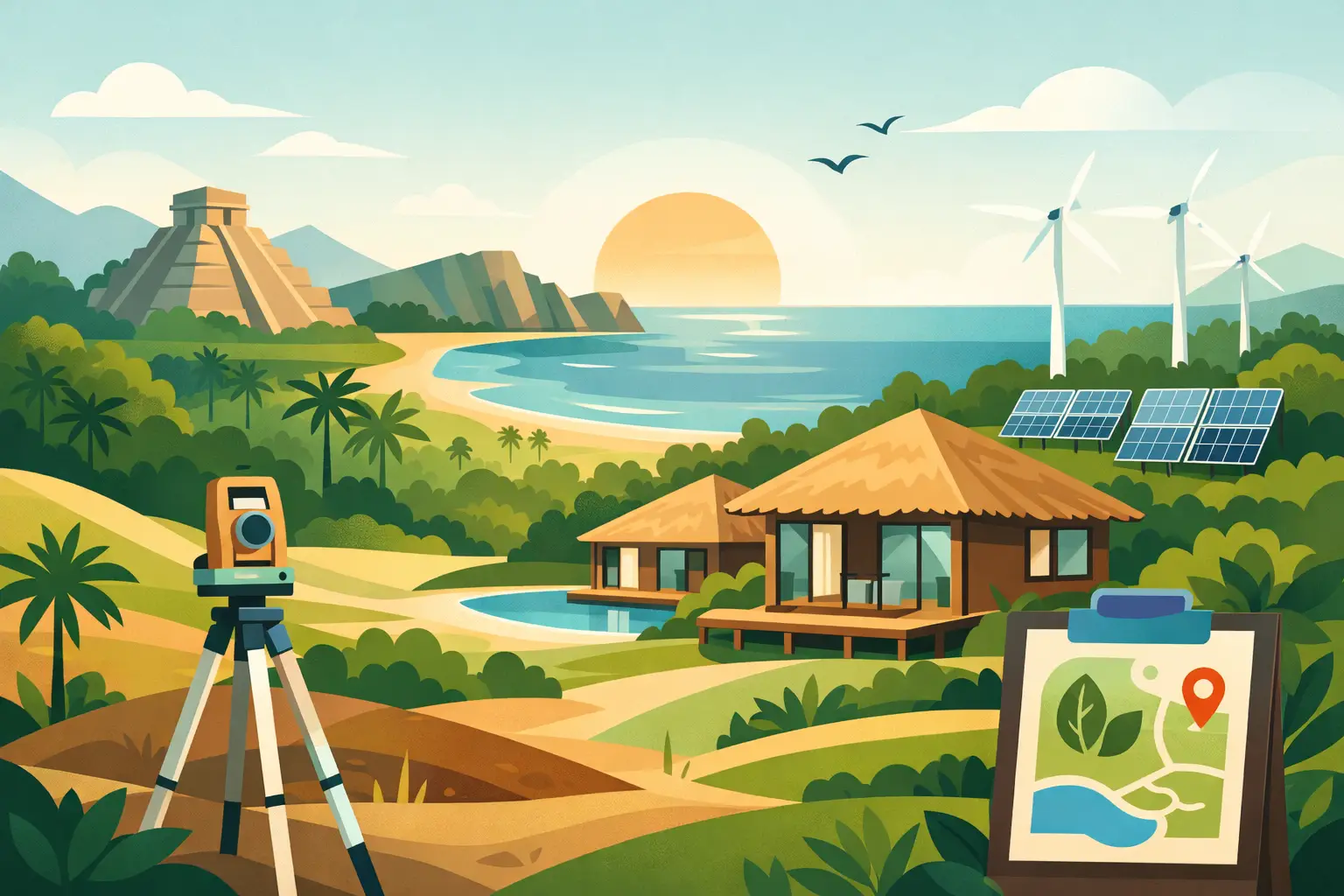
Mexico Land for Eco Resort: What to Look For
An eco resort can fail before the first structure goes up. Not because the vision was wrong, but because the land was. If you are evaluating mexico land for eco resort development, the setting has to do more than look beautiful in photos. It has to support access, guest experience, legal clarity, long-term value, and the kind of low-impact hospitality travelers now actively seek.
That is where Baja California Sur stands apart. In places like Bahía Concepción, the appeal is immediate – turquoise water, desert mountains, quiet coves, and a feeling that the coastline still belongs to the landscape rather than overbuilt tourism. For buyers who want more than a speculative parcel, this kind of setting offers something rare: land that can carry both the emotional pull of a destination and the commercial logic of a hospitality venture.
Why mexico land for eco resort demand keeps growing
The eco resort category has matured. Guests are no longer satisfied with a generic room and a sustainability claim on a website. They want immersion, privacy, beauty, and a real sense of place. They also want comfort, which means location matters as much as philosophy.
Mexico continues to attract hospitality investors because it combines international tourism demand with extraordinary geographic variety. But not every market offers the same opportunity. Some coastal zones are already crowded, expensive, and heavily defined by conventional resort patterns. That can work for certain projects, but it is less compelling for a nature-based concept that depends on authenticity and open space.
Bahía Concepción appeals to a different buyer. It offers the visual drama people associate with Baja, yet it still feels undiscovered compared with larger resort corridors. That matters because eco hospitality performs best when the environment is part of the experience, not just the backdrop. A guest should feel they have arrived somewhere distinct, not simply booked another room near the beach.
What makes land right for an eco resort
The first filter is simple: can the land support the experience you want to sell? A striking parcel on paper may still be the wrong fit if it lacks practical access, buildable areas, or a natural layout that lends itself to privacy.
Topography is one of the biggest value drivers. A property with elevated viewpoints, shoreline access, or natural terraces can create unforgettable guest accommodations without forcing the site into an artificial plan. In eco resort development, the landscape should do part of the design work. It should create drama, orientation, and a natural rhythm between structures and open space.
Water views matter, of course, but they are not the only feature that shapes desirability. Wind patterns, shade, vegetation, and the way the land meets the coast all affect comfort and usability. A calm bay can support kayaking, paddleboarding, snorkeling, and small boating activity that adds to the guest experience. A parcel framed by mountains and desert flora can feel cinematic even before any improvements are made.
Then there is the issue buyers sometimes underestimate – legal clarity. Titled land carries obvious weight in any acquisition, and even more so for an investor thinking beyond personal use. If the long-term plan includes hospitality, resale, partnership, or phased development, clean ownership matters. It reduces uncertainty and gives the asset a stronger foundation from day one.
Baja California Sur offers the right kind of isolation
Isolation is not always an advantage. If a property is too remote, development becomes harder, staffing becomes harder, and guest logistics become harder. But there is a sweet spot where seclusion becomes a premium feature rather than a costly obstacle.
That is one reason Bahía Concepción deserves serious attention. It offers the sense of escape that eco travelers want, while still being tied to regional access points that matter to owners and guests. Proximity to Loreto, Mulegé, and Loreto International Airport adds practical value without stripping away the feeling of discovery. For US buyers in particular, that balance can be unusually attractive. The destination feels wild, but it is not inaccessible.
This is a major distinction in the mexico land for eco resort conversation. The best opportunities often exist where beauty is abundant but density is still low. Once a market becomes too polished, eco positioning can start to feel manufactured. In a place like Bahía Concepción, the natural character is already there. Development does not need to invent the magic. It just needs to respect it.
The business case behind the beauty
A lot of land buyers fall in love with Baja first and justify the numbers second. The stronger approach is to do both at once.
An eco resort is not just a lifestyle idea. It can be a revenue-generating hospitality asset with multiple layers of appeal. Depending on the site, the concept might range from luxury glamping and wellness casitas to a low-density coastal retreat focused on boating, wildlife, and outdoor recreation. The common thread is that guests pay a premium for privacy, scenery, and a feeling of meaningful escape.
That creates upside, but it also creates expectations. Investors need to think about who the eventual guest is. Will the property attract couples seeking a quiet retreat, adventure travelers drawn to Baja’s marine environment, families wanting an outdoor base, or high-end travelers looking for exclusivity without the resort-corridor atmosphere? The land should support the answer.
There is also a timing advantage in emerging coastal areas. In mature destinations, much of the upside has already been priced in. In less saturated markets, buyers may acquire land at a stage where scarcity, visibility, and tourism growth can still work in their favor. That does not mean every parcel will perform equally, and it does not mean development is effortless. It means the right land in the right setting has room to appreciate for reasons that go beyond simple speculation.
How to evaluate mexico land for eco resort potential
Start with the destination before the parcel. If the surrounding area has no natural draw, weak access, or little identity, the project will have to work too hard to create demand. Bahía Concepción does not have that problem. Its beaches, marine life, desert scenery, and relaxed pace already form a compelling story.
From there, assess how the land interacts with that story. A strong parcel should feel like an extension of the destination itself. It should offer a memorable arrival, strong orientation to views, and enough usable space for thoughtful planning. Eco resort buyers often make the mistake of chasing acreage alone. More land is not always better if the site lacks shape, access, or guest appeal.
Think in terms of experience sequence. What does a guest see first? How does privacy work between accommodations? Where do sunrise and sunset matter most? Can the land support gathering spaces without sacrificing quiet? Good hospitality land is not just scenic. It is choreographed by nature.
You should also weigh the trade-offs honestly. A more untouched parcel may offer stronger emotional impact, but it may require more planning and patience. A site closer to services may be easier to activate, but it could feel less exclusive. Neither is automatically better. The right answer depends on whether your priority is speed, privacy, prestige, or long-term positioning.
Why untouched coastal Baja has lasting appeal
Travel tastes shift, but certain assets hold their magnetism. Clear water, dramatic terrain, low density, and a feeling of authenticity do not go out of style. If anything, they become more valuable as more coastlines become crowded and overbuilt.
That is why The Real Baja continues to resonate with buyers who want something more personal and more strategic than a standard resort-market purchase. The attraction is emotional, but it is not only emotional. Rare titled coastal land in a place that still feels pristine carries its own logic. It can serve as a private legacy holding, a second-home play with future hospitality potential, or the foundation for a destination-led venture that speaks to where travel is headed.
For investors and dreamers alike, the real question is not whether eco hospitality has a future in Baja California Sur. It is whether the best land will still be available once the broader market catches up. In a coastline as extraordinary as Bahía Concepción, waiting often costs more than deciding.
