
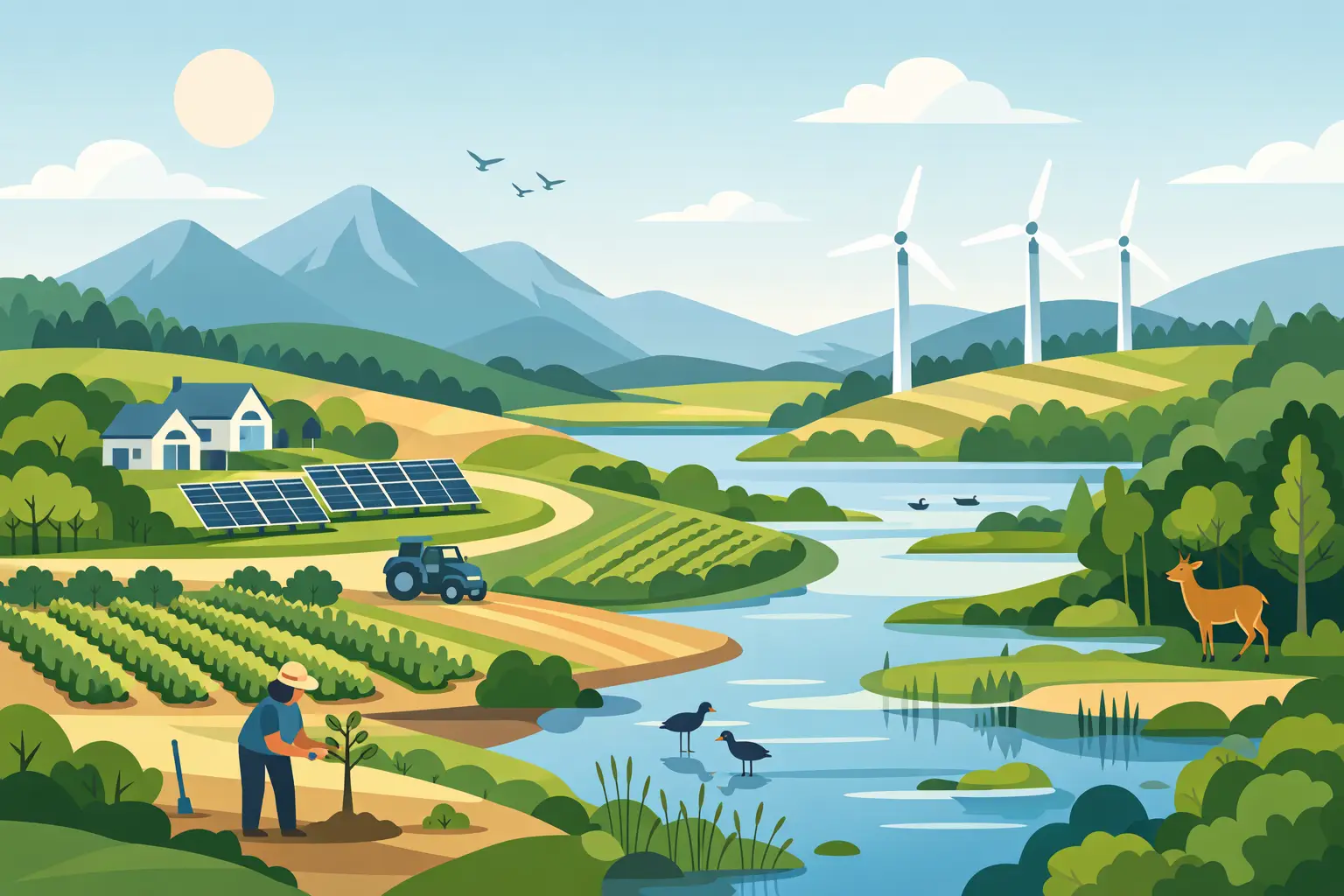
What Ecological Oriented Land Really Offers
A stretch of coastline can look beautiful in a listing photo. That does not make it rare. What makes ecological oriented land different is the combination of beauty, usable vision, and long-term relevance. For buyers who want more than a postcard view, this category of property stands out because it answers a bigger question: how do you own something extraordinary without buying into congestion, overbuilding, or a market that has already peaked?
For the right buyer, ecological oriented property is not a niche idea. It is a practical way to align lifestyle and investment. It appeals to people who want open space, low-density surroundings, and a setting that still feels honest. It also appeals to investors and hospitality creators who understand that travelers are increasingly drawn to places where the landscape remains the main attraction.
What ecological oriented means in real estate
In real estate, ecological oriented usually describes land and development concepts that work with the natural setting instead of trying to overpower it. That can mean lower-density planning, structures placed with topography in mind, respect for viewsheds, and project ideas built around nature-based experiences rather than high-impact construction.
This does not mean the land is only for preservation or that it lacks commercial value. In many cases, the opposite is true. A parcel with ecological oriented potential may be well suited for a private retreat, a second home compound, boutique hospitality, glamping, wellness concepts, or a carefully planned waterfront project that depends on natural character to create demand.
The distinction matters. Buyers are no longer impressed by square footage alone. They are paying attention to setting, privacy, scarcity, and how a property will feel five, ten, or twenty years from now. Land that preserves those qualities often carries stronger emotional and market appeal than land in crowded corridors.
Why ecological oriented land has stronger appeal now
The market has changed. Many buyers, especially those looking beyond a primary residence, are moving away from noise, density, and overprogrammed destinations. They want access, but not constant activity. They want natural beauty, but not the kind packaged into a resort experience that feels interchangeable with anywhere else.
That is where ecological oriented land becomes compelling. It offers a kind of ownership that feels both personal and strategic. You can imagine waking to water, desert hills, and uninterrupted sky, but you can also see how future buyers, guests, or visitors would value that same setting.
This is particularly relevant in places where the land itself still feels undiscovered. In coastal Baja, for example, the appeal is not manufactured. It comes from calm bays, dramatic terrain, boating access, marine life, and a pace that has not been flattened by mass development. That kind of authenticity is difficult to recreate and even harder to buy once a region becomes widely built out.
Ecological oriented development is not anti-growth
One of the biggest misconceptions is that ecological oriented property is somehow opposed to investment or development. Serious buyers know that is too simplistic. The real issue is not whether land can be developed. It is how.
A thoughtful project can protect the reasons people are drawn to a place while still creating substantial value. In fact, lower-density, nature-centered concepts often command stronger interest because they offer something scarce. A compact eco-retreat with water access, privacy, and design sensitivity can be more attractive than a larger but generic build in a saturated market.
There is, of course, a trade-off. More intensive development can sometimes promise faster scaling. Ecological oriented concepts may require more patience, more design discipline, and a clearer understanding of the buyer or guest experience. But patience is often where the upside lives. When a place remains beautiful because it was not overdone, that restraint becomes part of its long-term value.
What buyers should look for in ecological oriented property
Not every scenic parcel fits the idea in a meaningful way. The strongest opportunities usually combine natural appeal with practical fundamentals.
Location comes first. A property can feel remote and still be accessible enough for residential use, hospitality, or recreation. That balance matters. Buyers want the feeling of escape, but they also want proximity to airports, established towns, services, and navigable routes.
Legal clarity is equally important. Titled land changes the conversation because it reduces uncertainty and supports a more confident acquisition strategy. For US-based buyers especially, ownership structure is not a side issue. It is central to how opportunity is evaluated.
Topography and views are another factor. Ecological oriented value often comes from how the land sits within the landscape. Elevated outlooks, protected coves, desert-meets-sea terrain, and natural orientation toward sunrise or sunset all influence what can be created there.
Then there is use potential. Some parcels are ideal for a private home with room to breathe. Others are better suited for multiple estate lots, a nature-forward hospitality concept, or a nautical lifestyle vision. The right parcel does not just look impressive. It supports a coherent future.
The investment case for ecological oriented coastal land
Coastal land has always carried emotional power. Ecological oriented coastal land adds a second layer: scarcity that cannot be replicated once lost. That matters because markets eventually catch up to places with exceptional natural settings.
When investors enter early into a region with strong beauty, limited density, and growing awareness, they are not simply buying dirt. They are securing position. If the area also offers access to boating, fishing, kayaking, wildlife viewing, second-home demand, and tourism potential, the appeal widens considerably.
This is why undeveloped or lightly developed coastal zones can be so interesting. They allow buyers to participate before the destination is fully priced in. The key is choosing a place where the environmental character is not a marketing invention but a lived reality. Bahía Concepción has that quality. Its coves, beaches, mountains, and tranquil water create a setting where ecological oriented ownership feels natural rather than forced.
Still, no investment category is automatic. Appreciation depends on regional growth, title strength, access, and the quality of the land itself. Buyers should be wary of assuming every remote parcel will become valuable just because it is pretty. The best opportunities combine romance with fundamentals.
Ecological oriented projects that make sense
The strongest concepts usually start by asking what the land wants to be. That sounds poetic, but it is also good business. A windswept ridge, a sheltered bayfront parcel, and a broad inland coastal tract should not be approached the same way.
In many cases, ecological oriented land performs best when the project remains close to the experience people came for in the first place. That could mean a low-density residential enclave, a refined off-grid retreat, a boutique stay focused on paddling and marine adventure, or a wellness destination shaped by quiet, views, and open terrain.
There is room for ambition here, but not every ambitious plan is the right one. A project that demands heavy alteration of the site may dilute the very quality that made the property attractive. Buyers who understand this often make better long-term decisions. They do not chase maximum buildout at any cost. They look for maximum fit.
Why this matters to a lifestyle buyer too
You do not need to be a developer to care about ecological oriented land. For private buyers, it can be the difference between owning a property and owning a place that keeps calling you back.
That difference shows up in small moments. The absence of traffic noise. The dark sky at night. The launch point for a kayak just beyond your property. The feeling that the horizon is still intact. These are not abstract luxuries. They shape how a second home is used, shared, and remembered.
They also influence future marketability. Even if a buyer enters for personal enjoyment, life changes. Plans shift. A parcel that offers both emotional satisfaction and broad appeal is usually the stronger hold.
Ecological oriented land is not about stepping away from value. It is about recognizing where value is heading. As more buyers seek titled coastal property with authenticity, privacy, and room for thoughtful vision, the land that still delivers those qualities will continue to stand apart. The best opportunities are not merely beautiful. They give you something increasingly hard to find – the chance to own a remarkable place before the rest of the market fully understands it.
