
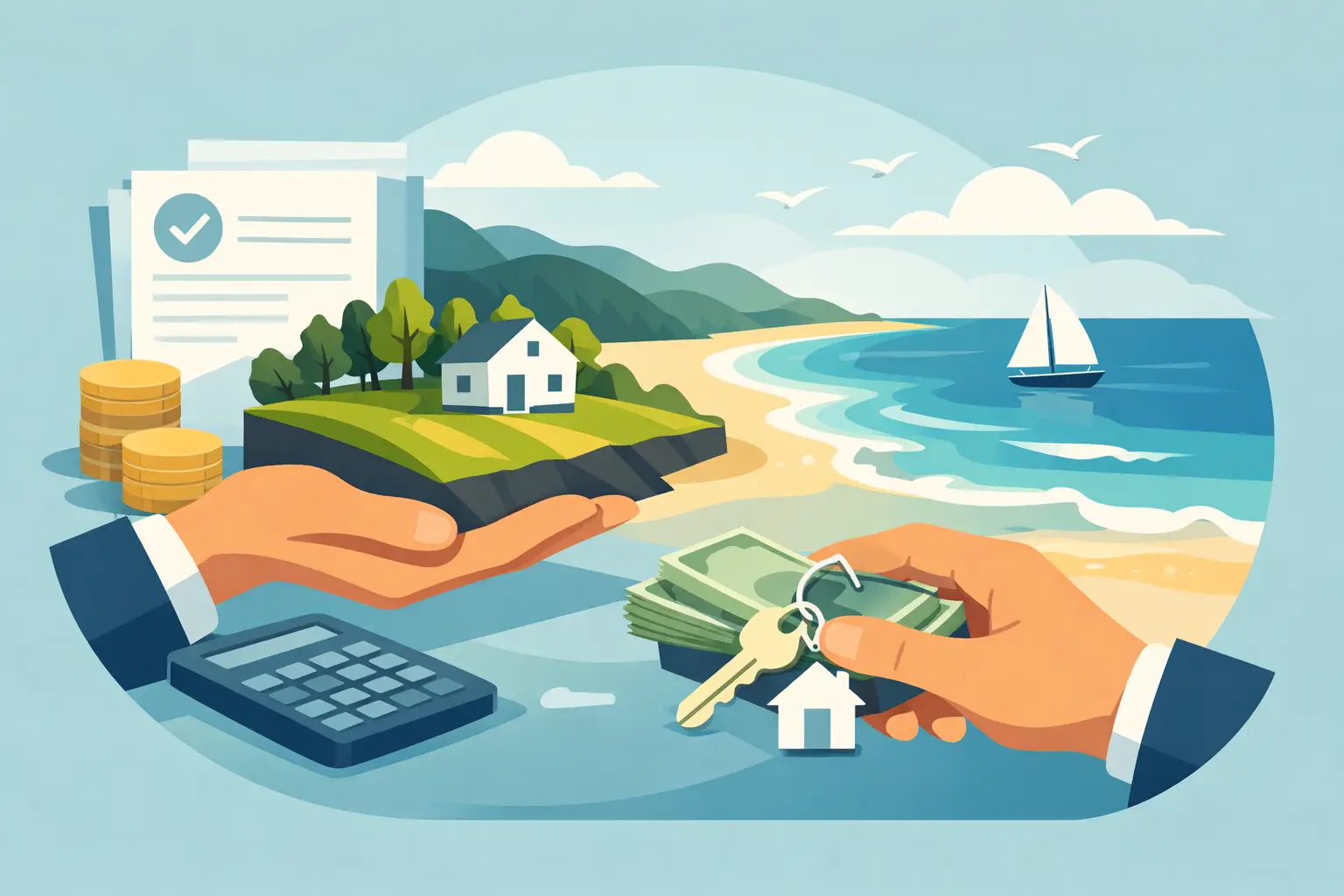
How to Finance Coastal Land Purchases
A beautiful stretch of coastline can stir the imagination fast – a private retreat above a turquoise bay, a boutique hospitality concept, a future home where the desert meets the sea. But when buyers start asking how to finance coastal land purchases, the dream quickly becomes practical. That is where smart planning matters most, because raw or lightly improved coastal land is financed differently than a suburban home, and the right approach can shape both your timeline and your upside.
For many buyers, especially those looking at Baja California Sur, financing land is less about finding one standard loan product and more about building the right capital stack. The property type, title structure, intended use, and development horizon all influence what is possible. Coastal land can be one of the most compelling long-term acquisitions you make, but it rewards buyers who understand the rules before they fall in love with the view.
How to finance coastal land purchases without wasting time
The first thing to know is that land lenders see more risk than home lenders. A finished house has a clear valuation model, a broad resale market, and immediate utility. Coastal land, even when legally titled and exceptionally well located, can require a longer hold period and a more specialized buyer if resold. Because of that, traditional financing may come with larger down payments, shorter terms, and closer scrutiny of the parcel itself.
This is why your financing conversation should start with the land’s actual profile. Is it fully titled? Does it have legal access? Are utilities nearby or planned? Is your vision personal use, long-term appreciation, or a hospitality project? A lender, private capital source, or seller will price risk based on those details, not just on your enthusiasm.
For serious buyers, it helps to think in three buckets. First is what you can fund personally through cash reserves or liquid assets. Second is what can be financed through a formal or semi-formal lending structure. Third is what the land can realistically become over time. The more clearly you can connect those three pieces, the easier it is to finance with confidence.
The most common ways to finance coastal land purchases
Cash remains the cleanest option, and there is a reason experienced land buyers often prefer it. Cash can strengthen negotiating power, reduce closing complexity, and give you flexibility if you want to hold the property quietly before building. On rare coastal inventory, speed matters. When a parcel combines beauty, access, and legal clarity, all-cash buyers often move first.
That said, not every buyer wants to tie up that much capital in one acquisition. A land loan is sometimes available, though terms are usually less generous than a primary home mortgage. Expect a higher down payment and a shorter amortization period. Some lenders also want to see a clear use case and stronger borrower liquidity, especially for cross-border or specialty coastal holdings.
Seller financing can be especially attractive in land transactions. When offered by the seller, it may reduce friction and create more flexibility on down payment, term length, and payment timing. For buyers who want to secure a premium coastal parcel now and preserve capital for future site work or construction, this route can make strategic sense. The trade-off is that interest rates may be higher than some conventional products, and the agreement needs to be reviewed with care.
Private financing is another path, particularly for investors and entrepreneurs who already work with real estate capital partners. This can move faster than bank financing and may fit better when the property has development potential rather than immediate residential use. Still, private money is rarely cheap. It works best when the land has a defined business case, not just a vague plan to do something later.
Some buyers also use portfolio-backed borrowing or a line of credit secured by other assets. That can be a smart move if you have substantial equity elsewhere and want to make a competitive land offer without liquidating long-term holdings. The advantage is flexibility. The risk is that you are putting another asset base behind a purchase that may take time to mature.
What lenders and sellers look at first
Income and credit matter, but with land, the parcel itself often carries equal weight. A legally titled coastal property with strong access, known boundaries, and a credible path to use is easier to finance than land with unanswered questions. Beauty helps you want it. Clarity helps you buy it.
Lenders and sellers typically want to see that you can carry the asset even if your timeline shifts. Coastal land is often a patience play. Maybe you plan to build in three years and it becomes five. Maybe you intended a small hospitality concept and decide to hold until the local market advances further. Financing works better when your balance sheet can absorb those changes without pressure.
They also want to know whether the property fits your stated purpose. If you say this is for a future second home, that is a different profile than a marina-adjacent commercial concept or an eco-retreat project. Matching the financing structure to the actual use case can prevent expensive mismatches later.
Why coastal land financing is different in Baja
In Baja, the quality of the title and the credibility of the transaction framework matter enormously. Buyers are not just acquiring scenery. They are acquiring legal rights, development potential, and access to one of the last great stretches of authentic coastline still capable of feeling wild and private. That makes due diligence inseparable from financing.
For U.S. buyers especially, cross-border coastal purchases require a disciplined approach. You want to understand the ownership structure, transaction costs, holding costs, and future development path before choosing the financing route. A parcel in Bahía Concepción can feel wonderfully untouched, and that is part of its value, but untouched land also requires realistic budgeting around infrastructure, planning, and timing.
This is where titled coastal inventory stands apart. When the land has a clearer legal foundation, financing conversations become far more productive. You are no longer trying to force a dream into a risky framework. You are evaluating a real asset with a credible future.
How much should you put down?
More than the minimum, if you can. Coastal land is not the place to stretch so thin that every next step depends on perfect conditions. A larger down payment lowers carrying stress, improves your negotiating position, and gives you more room for the unexpected.
For many buyers, the better question is not, What is the lowest down payment available? It is, How much capital should I preserve after closing? If you buy the land but have nothing left for planning, improvements, legal review, surveys, or future site preparation, you may have won the parcel and lost your flexibility.
That matters even more for buyers pursuing lifestyle-investment properties. A coastal lot can be both deeply personal and financially promising, but only if you can hold it comfortably long enough for the vision to take shape.
Costs buyers often underestimate
The purchase price is only the opening number. You should also budget for legal review, title-related due diligence, closing expenses, taxes or transfer-related costs, entity structuring if relevant, and any planning work tied to your intended use. If the property is being acquired for future development, early studies and site evaluation can become part of the real cost basis.
Then there is the carrying period. Even if the land is your long-view investment, you still need to cover ongoing obligations while the property appreciates or moves toward construction. Buyers who account for this from day one are usually the ones who stay in control of the asset.
A smarter way to approach the purchase
Start with your endgame, not the financing product. If your goal is a legacy homesite, your financing should favor patience and low stress. If your goal is a tourism or hospitality concept, your financing should leave room for planning and staged investment. If your goal is pure appreciation, simplicity may matter more than leverage.
Then work backward. Decide what monthly or annual carrying cost feels comfortable. Decide how much liquidity you want left after acquisition. Decide whether speed, leverage, or flexibility matters most. Once those answers are clear, the financing path usually narrows on its own.
At Bahia Concepcion Estates, this is exactly why legally titled coastal land attracts serious attention. Buyers are not chasing crowded resort inventory or overbuilt shoreline. They are positioning themselves in a natural paradise where scarcity, access, and authenticity still have room to work in their favor.
The best coastal land purchases are rarely the ones financed at the absolute limit. They are the ones structured well enough that you can enjoy the horizon, hold with confidence, and let the opportunity ripen on your terms.
